
Most ingredient posts in this series end with “the evidence is weaker than the marketing.” This one is different.
Red yeast rice works. That’s the problem.
Its active compound is chemically identical to a prescription statin, and the regulatory history that follows from that fact is unlike anything else covered here.
Identical, not similar
The central fact is stated the same way across every regulatory document.
Monacolin K in lactone form is identical to lovastatin, the active ingredient of prescription medicines authorised for treating high cholesterol in the EU[1].
Not analogous. Not structurally related. The same molecule.
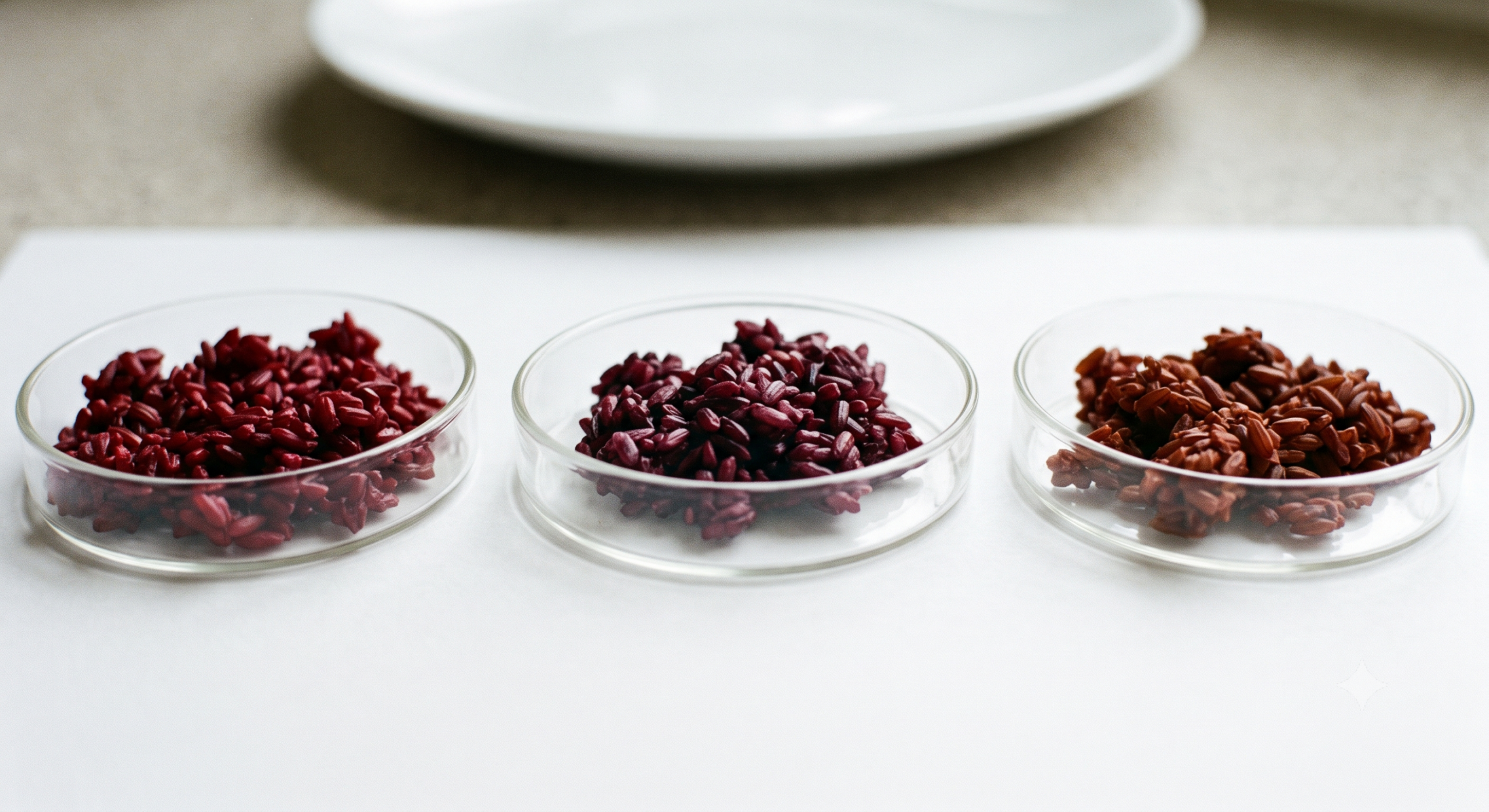
Red yeast rice is produced by fermenting rice with the yeast *Monascus purpureus*, which happens to synthesise this compound. Lovastatin was originally derived from fungal fermentation too.
EFSA’s assessment followed directly: intake of monacolins from red yeast rice supplements could result in exposure to monacolin K in the therapeutic dose range of lovastatin[2].
So a person taking red yeast rice may be taking a statin at a treatment dose, obtained without prescription, monitoring, or a clinician’s knowledge.
The regulatory reversal
The history here is unusual, and worth following.
2013 — EFSA supported a health claim for monacolin K from red yeast rice at a daily intake of 10 mg[3]. That established the market.
2018 — EFSA shifted from efficacy to safety and concluded that monacolins from red yeast rice could not be considered safe for consumers[3].
2022 — The EU set a maximum of under 3 mg of monacolins per daily portion, with mandatory warning labels[4].
2025 — Reviewing additional data submitted by industry, EFSA reiterated that exposure at intake levels as low as 3 mg/day could lead to severe adverse effects on the musculoskeletal system, including rhabdomyolysis, and on the liver[5].
The same body that endorsed 10 mg later concluded there was insufficient evidence to establish any safe daily intake.
That reversal isn’t a scandal — it’s what happens when the question changes from “does it work” to “is it safe,” and different evidence becomes relevant.
What was reported
The adverse effects mirror those of the drug, which follows from them being the same compound.
Reported reactions involve the musculoskeletal system including rhabdomyolysis, hepatic alterations, neurological disorders, and gastrointestinal issues[6]. Cases of rhabdomyolysis and hepatitis requiring hospitalisation have been recorded[2].
EFSA noted these occurred at intakes as low as 3 mg/day, taken for periods between two weeks and one year[4].
Rhabdomyolysis is severe muscle breakdown that can cause kidney failure. This is not a mild adverse event category.
One point about how to read these reports. Adverse event reports record events suspected of being linked to a product — they are not confirmed causal findings, and someone taking a supplement who develops a symptom may have developed it anyway. Spontaneous reporting also tends to undercount, since most events go unreported.
What gives these particular reports weight is corroboration from a different direction: the compound is identical to a drug with a documented profile of exactly these effects. The reports and the pharmacology point the same way.
Why the trials didn’t catch it
Here is the methodological point, and it applies well beyond this ingredient.
EFSA’s 2025 opinion explains why the efficacy literature was reassuring while the safety signal came from elsewhere.
The vast majority of randomised trials reviewed were designed for efficacy, lasted under 6 months, and included fewer than 100 subjects per arm — a sample inadequate to detect adverse events occurring in fewer than 1 in 100 or 1 in 1,000 participants[5].
And several trials did not report on adverse events at all, or on the methodology used to assess them, or on the dose of monacolins administered[5].
So the safety signal came from nutrivigilance and post-marketing case reports, not from the trials.
This is a general lesson. A trial powered to detect a cholesterol change is not powered to detect rare harm. Absence of reported adverse events in efficacy trials is weak evidence of safety — a distinction this series has encountered repeatedly, most closely in the cognitive trials post.
Two further uncertainties
Beyond dose, the product itself varies.
Composition is not uniform. Monacolin content varies significantly from one product to another[6]. EFSA found recommended daily intakes across products ranging from 2 to 48 mg[7].
The lactone-to-acid ratio is inconsistent, with possible differences in bioavailability[6]. Only the lactone form is identical to lovastatin.
And there’s a contaminant issue. Some strains of *Monascus purpureus* produce citrinin, a nephrotoxic mycotoxin, which is why a maximum level of 100 μg/kg is regulated in these supplements[5].
How different countries handled it
The responses diverged, which is informative in itself.
EU — Maximum under 3 mg per daily portion since 2022, with mandatory warnings stating the product is unsuitable for pregnant or breastfeeding women, children, people over 70, and anyone already taking cholesterol-lowering medication such as statins[3].
Canada — Health Canada aligned these substances with the Prescription Drug List, with a practical threshold of about 1 mg or more of monacolins per day, above which products are generally treated as prescription medicines[3].
UK — Following Brexit, regulation falls to the Food Standards Agency, which has taken a precautionary approach but has still not announced an official position[3].
The Canadian framing is the clearest statement of the underlying issue: products delivering pharmacologically meaningful amounts should not be regulated as natural health products that effectively function as statin drugs[3].
What this means practically
If you take a statin, red yeast rice is explicitly named in EU warning requirements as unsuitable. Taking both means taking two doses of the same class.
If you’re pregnant or breastfeeding, lovastatin’s prescribing information discourages use[5], and the same applies here.
If you’re over 70, EU labelling names this group specifically.
If you take medication that interacts with statins, the interaction profile is the same. Lovastatin’s prescribing information notes myopathy risk increased by concomitant use with certain other medicines[5].
If you’re taking it for cholesterol, the honest framing is that you may be self-prescribing a statin without the monitoring that accompanies a prescription — liver enzymes, symptom review, dose adjustment.
That’s the conversation to have with a clinician: not whether red yeast rice works, but whether a statin is appropriate for you and, if so, one that comes with monitoring.
If you’re in Korea
Regulatory status differs by country, and Korea’s treatment of monacolin-containing products should be checked on the official food safety portal rather than assumed from EU or North American rules[8].
The general principle from the classification post applies with unusual force here. A compound identical to a prescription drug sits awkwardly in any supplement category, and which category a product falls into determines what oversight it received — not what it does in your body.
Closing
Every other ingredient in this series raised the question of whether it does enough. This one raises the opposite question.
Monacolin K in lactone form is lovastatin. Not similar to it — identical. Which means the relevant comparison isn’t to other supplements but to a prescription medicine, complete with its adverse event profile, its interaction list, and its monitoring requirements.
The methodological lesson generalises further than the ingredient. Efficacy trials under six months with fewer than 100 people per arm cannot detect harm occurring in 1 in 1,000. The safety signal had to come from post-marketing surveillance instead.
So when a supplement’s evidence base consists of short efficacy trials showing benefit, that tells you something about whether it works. It tells you considerably less about what else it does.
Key Terms
- Monacolin K — the active compound in red yeast rice; in lactone form, chemically identical to lovastatin.
- Lovastatin — a prescription statin used to lower cholesterol.
- Rhabdomyolysis — severe breakdown of muscle tissue, which can lead to kidney failure.
- Nutrivigilance — systematic collection of adverse event reports after a product is on the market.
- Lactone form — one of two chemical forms monacolin K can take; the form identical to lovastatin.
- Citrinin — a kidney-toxic mycotoxin some *Monascus* strains can produce.
At a Glance
- Monacolin K in lactone form is identical to lovastatin, a prescription statin
- Supplement intake can reach the therapeutic dose range of lovastatin
- EFSA supported a claim at 10 mg/day in 2013, then concluded in 2018 that monacolins could not be considered safe
- EU set a maximum of under 3 mg per daily portion in 2022 with mandatory warnings
- EFSA 2025: severe adverse effects reported at intakes as low as 3 mg/day, including rhabdomyolysis and liver injury
- Efficacy trials were under 6 months with fewer than 100 per arm — unable to detect events occurring in 1 in 100 or 1 in 1,000
- Product monacolin content varies widely — recommended intakes across products ranged 2 to 48 mg
- Citrinin, a nephrotoxic mycotoxin, is separately regulated at a maximum of 100 μg/kg
※ This article is for general information and does not replace medical advice, diagnosis or treatment. Monacolin K is chemically identical to a prescription statin. Do not take red yeast rice alongside statin medication, during pregnancy or breastfeeding, or without discussing it with a clinician — particularly if you take other prescribed medicines. Unexplained muscle pain, weakness, dark urine, or yellowing of the skin or eyes warrants prompt medical attention. Regulatory status differs by country; confirm current rules on official sources.
References
- EFSA ANS Panel, “Scientific opinion on the safety of monacolins in red yeast rice”, EFSA Journal (identity with lovastatin; therapeutic dose range), https://www.ncbi.nlm.nih.gov/pmc/articles/PMC7009499/
- “Rhabdomyolysis or Severe Acute Hepatitis Associated with the Use of Red Yeast Rice Extracts: an Update from the Adverse Event Reporting Systems”, PMC, https://pmc.ncbi.nlm.nih.gov/articles/PMC10618339/
- “How monacolins from red yeast rice triggered a global regulatory crisis”, NutraIngredients (2013 to 2024 timeline; EU, Canadian and UK positions), https://www.nutraingredients.com/Article/2026/06/03/how-monacolins-from-red-yeast-rice-triggered-a-global-regulatory-crisis/
- Commission Regulation (EU) 2022/860 of 1 June 2022 (adverse reactions at 3 mg/day over 2 weeks to 1 year), https://eur-lex.europa.eu/legal-content/EN/TXT/PDF/?uri=CELEX%3A32022R0860
- EFSA NDA Panel, “Scientific Opinion on additional scientific data related to the safety of monacolins from red yeast rice”, EFSA Journal 2025 (trial design limitations, citrinin, lovastatin SmPC restrictions), https://www.ncbi.nlm.nih.gov/pmc/articles/PMC11868785/
- “Monacolin K: EFSA Questions Its Safety” (organ systems affected; compositional and lactone-acid ratio variability), Farmaimpresa, https://farmaimpresa.com/en/monacolin-k-efsa-questions-its-safety/
- “EFSA declares monacolins from red yeast rice unsafe at any dose”, NutraIngredients, https://www.nutraingredients.com/Article/2025/03/13/efsa-declares-monacolins-from-red-yeast-rice-unsafe-at-any-dose/
- Food Safety Korea (MFDS), recognised functional ingredient and approved wording lookup, https://www.foodsafetykorea.go.kr/