
The fishy burp is usually treated as an inconvenience — something to be masked, delayed, or endured.
It’s better understood as a signal of fish oil oxidation. And the data on what happens when that signal gets masked is the most interesting part of this topic.
The taste is a chemical signal
Omega-3 fatty acids carry multiple double bonds. Those bonds are what make EPA and DHA biologically interesting, and also what makes them fragile.
Exposure to heat, light and oxygen breaks them, producing compounds that weren’t in the original oil — first peroxides, then secondary breakdown products such as aldehydes and ketones[2].
Those secondary products are what you taste. The fishy burp is described as a genuine chemical signal, not merely an unpleasant flavour[2].
Which means the taste is doing something useful. It tells you the oil has begun to degrade.
How freshness is measured
Three lab values, with defined limits under the GOED voluntary monograph[1][2]:
- Peroxide Value (PV) — primary oxidation products. Limit ≤5 meq O₂/kg
- para-Anisidine Value (p-AV) — secondary oxidation products. Limit ≤20
- TOTOX — combined score, calculated as (2 × PV) + p-AV. Limit ≤26
Codex Alimentarius specifies the same figures for fish oils intended for human consumption[1].
TOTOX exists because either number alone can mislead. An oil can show a deceptively low peroxide value while carrying significant anisidine-value degradation — the combined score catches what one measure would miss[2].
Other pharmacopoeias apply looser thresholds. The European and British Pharmacopoeias and Australian authorities use PV ≤10, p-AV ≤30, TOTOX ≤50[6].
The finding about flavouring
Here is what changed my thinking.
A study of 72 consumer omega-3 supplements compared flavoured and unflavoured products against the TOTOX limit of 26. The result[3]:
- Flavoured: 68% exceeded the limit (23 of 34)
- Unflavoured: 13% exceeded the limit (5 of 38)
Five times the rate.
The analysis controlled for delivery system — enteric coating, liquid, gelatin softgel, spray — and for source and third-party certification[3]. Flavouring remained the variable associated with higher oxidation.
The mechanism suggested is straightforward. Flavouring masks the taste, so oxidation proceeds undetected[1]. A lab TOTOX test quantifies freshness regardless of masking flavours[1] — but a consumer relying on taste has lost the signal.
So the intuitive reading is backwards. A product that tastes of nothing hasn’t necessarily stayed fresh. It may simply be flavoured.
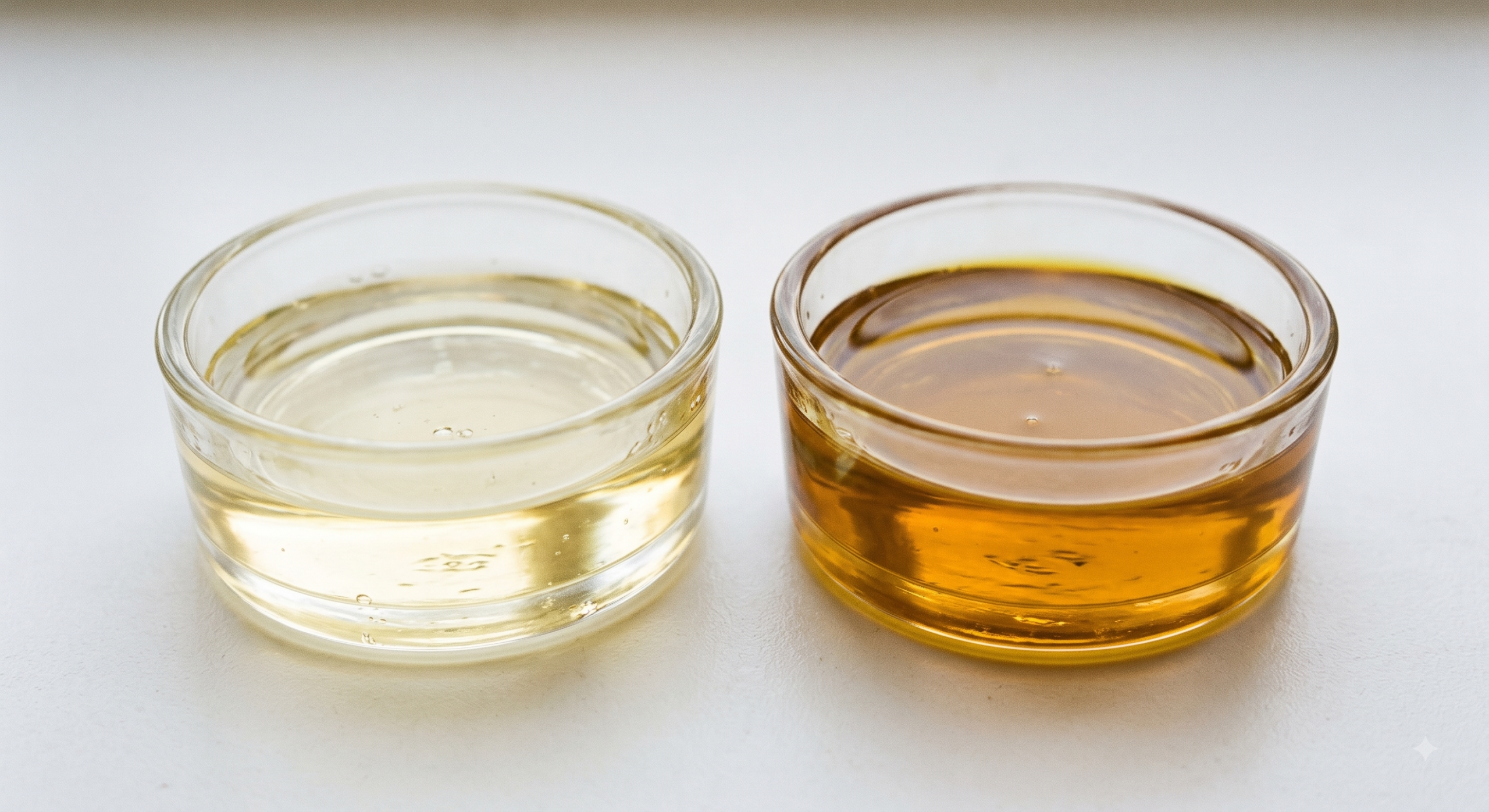
How common is oxidation? The studies disagree
This is where honest reporting requires showing the spread rather than picking a number.
| Study population | Finding |
| Canada, 171 supplements, 49 brands | 50% exceeded at least one measure; 39% exceeded TOTOX |
| USA | 27% had more than twice recommended peroxide levels |
| South Africa; New Zealand (earlier assessment) | over 80% exceeded recommended levels |
| New Zealand, 47 products (later analysis) | 72–86% complied with PV, p-AV and TOTOX limits |
| 44 supplements, pooled estimate | Average PV 6.4 (limit 5); average TOTOX 23.8 (limit 26) |
[Table 1] Products exceeding oxidation limits, by study · Source: Each survey result[3][4][5][6]
The two New Zealand results are described in the literature as being in stark contrast to each other[6].
That divergence isn’t a reason to dismiss the concern. It’s a reason to treat any single prevalence figure — including reassuring ones — with caution. Testing methods, sampling and storage history all differ between surveys.
What oxidation limits are not
An important caveat, because this area attracts overstatement.
EFSA has explicitly stated that current evidence does not allow oxidation cutoffs to be interpreted as health-based safety limits, nor does it allow a direct link between peroxide or anisidine values and specific biological harm in humans[5].
The PLOS One authors make the same point from the other direction: industry standards relate to palatability, with too few data available to mandate standards relating to their effect on health[4].
So exceeding TOTOX 26 is a quality and freshness finding. It is not, on current evidence, a demonstrated safety finding. Claims that treat “exceeds oxidation limits” as synonymous with “unsafe” are running ahead of what’s established[5].
What oxidised oil does more clearly lose is structural integrity — with reduced formation of the specialised pro-resolving mediators we discussed in the EPA/DHA post[7]. That’s an efficacy argument rather than a harm argument.
Does the formulation change it?
Formulations differ in how they handle the taste, and it’s worth separating two distinct problems.
Enteric coating delays capsule dissolution past the stomach. That addresses the *reflux* route — oil returning up the oesophagus — rather than the oxidation itself. In the 72-product analysis, delivery system including enteric coating was treated as a covariate rather than the finding[3].
Flavouring addresses perception only, and the data above suggests it does so at a cost.
Freezing capsules is a common consumer approach to the same reflux problem, again without affecting oxidation state.
None of these change what’s inside. Only sourcing, processing, packaging and storage do that.
What to look for
Practical steps, in rough order of usefulness.
- Look for a TOTOX or oxidation figure, or third-party testing that includes one. Most products don’t publish it, and asking is reasonable.
- Treat absence of taste cautiously if the product is flavoured. That’s the finding above.
- Check packaging and storage. Light and heat drive oxidation. Opaque containers, and keeping bottles away from a sunny counter, both matter.
- Note purchase and opening dates. A large bottle taken slowly spends months oxidising after opening.
- Trust a strong off-taste in an unflavoured product. It’s information, and the appropriate response is to stop and check the product rather than persist.
And the point that applies throughout this series: an oil’s oxidation state tells you about quality, not about whether the ingredient is one you need.
Closing
I’d been treating the fishy aftertaste as the problem to solve. The oxidation data suggests it’s closer to the smoke alarm.
Flavoured products exceeded the freshness limit at five times the rate of unflavoured ones. Whatever the causal direction, that pairing should make anyone pause before choosing a product on the basis of how little it tastes of fish.
Two things keep this from becoming alarmism. The prevalence figures vary enormously between surveys — from 27% to over 80% depending on the study. And EFSA has said plainly that oxidation cutoffs aren’t health-based safety limits.
So: a freshness question, not a safety scare. But one where the most obvious consumer signal can be switched off by a flavouring agent.
At a Glance
- The fishy taste comes from secondary oxidation products — aldehydes and ketones — and is a genuine chemical signal
- GOED voluntary limits: PV ≤5, p-AV ≤20, TOTOX ≤26; TOTOX = (2 × PV) + p-AV
- European, British and Australian standards are looser: PV ≤10, p-AV ≤30, TOTOX ≤50
- In one 72-product study, 68% of flavoured supplements exceeded TOTOX 26 versus 13% of unflavoured
- Prevalence estimates vary widely by survey — 27% to over 80% — with two New Zealand analyses in stark contrast
- EFSA states oxidation cutoffs are not health-based safety limits, and no direct link to human harm is established
- Industry limits relate to palatability, not demonstrated health effects
- Enteric coating and flavouring address reflux and perception, not the oxidation state itself
※ This article discusses product quality measures and is for general information only. It does not evaluate any specific product or brand, and does not replace medical advice. Omega-3 supplements can affect bleeding and interact with anticoagulant medication — consult a clinician if you take prescribed medicines or have surgery scheduled.
References
- “TOTOX A-Z: the importance of being fresh” (GOED and Codex limits; masking by flavour), NFO, https://nfo.com/blogs/news/totox-a-z-the-importance-of-being-fresh
- “Why Omega-3 Oxidation Matters: TOTOX, IFOS, and How Fish Oil Quality Is Actually Measured”, Moana Natura, https://www.moananatura.com/blog/omega-3-oxidation-ifos-quality-testing
- “Delving into fish oil quality: a study on freshness” (72 supplements; flavoured vs unflavoured TOTOX exceedance), summarised at Dr Leslie Korn, https://drlesliekorn.com/research/omega-3-supplements-rancidity/
- “Fish oil supplements, oxidative status, and compliance behaviour: Regulatory challenges and opportunities”, PLOS One, https://journals.plos.org/plosone/article?id=10.1371%2Fjournal.pone.0244688
- “Is Your Fish Oil Rancid? What Oxidation Data Shows” (EFSA position on oxidation cutoffs), Dr William Wallace, https://www.drwilliamwallace.com/notes/rancid-fish-oil/
- “Fishing for answers: is oxidation of fish oil supplements a problem?”, PMC (Canada, USA, South Africa and New Zealand survey figures), https://www.ncbi.nlm.nih.gov/pmc/articles/PMC4681158/
- “Latest Findings On Omega-3 Oxidation And Bioavailability”, MVS Pharma (loss of pro-resolving mediator formation), https://mvs-pharma.com/literature-research-omega-3/omega-3-oxidation-and-bioavailability/